

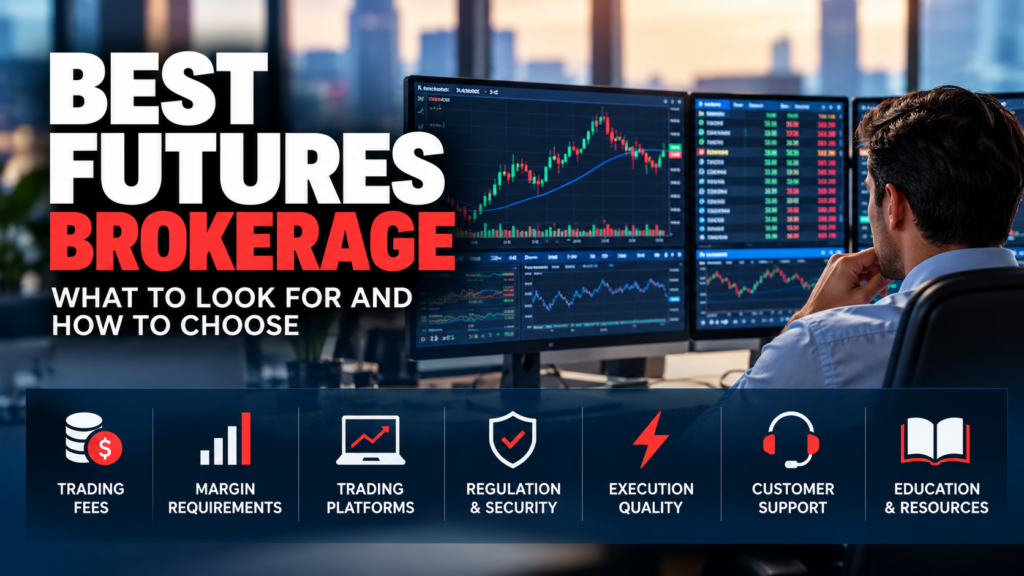

The best futures broker for you depends on what you trade, how frequently you trade, the platforms you need and the level of support you expect. A broker offering low advertised commissions may not be the most cost-effective choice once exchange fees, market data, platform charges and other costs are included.
Before opening an account, compare the full cost of trading, available futures markets, margin requirements, order-entry tools, regulatory background and customer service. These factors provide a more useful basis for choosing a brokerage than promotional rankings or a single headline price.
E-Futures.com is one option traders can evaluate as part of this process. The following guide explains what to look for when assessing a futures brokerage and how to determine whether its services match your trading requirements.
What Makes a Futures Broker a Good Choice?
A suitable futures broker should provide access to the markets you intend to trade, a reliable trading setup, clear pricing and support appropriate to your experience level. No single brokerage is the best fit for every trader.
Use these criteria when comparing your options.
1. Trading Fees and Total Cost
Commission rates are important, particularly for traders who place many orders. However, the advertised commission is only one part of the total trading cost.
Check the following before comparing brokerage pricing:
- Commission per contract per side and per completed round turn
- Exchange and regulatory fees
- Clearing charges
- Trading platform or technology fees
- Real-time market data subscriptions
- Account minimums and any applicable account fees
- Volume-based pricing and eligibility requirements
Ask for a complete fee schedule that applies to your account type, trading volume and chosen platform. Compare the total cost of a typical trading day rather than relying on the lowest advertised commission.
For more detail, see our futures brokerage comparison guide.
2. Margin Requirements and Account Funding
Futures trading uses margin, which is collateral required to maintain a position. It is not the same as purchasing the underlying asset outright.
A broker may publish different requirements for intraday positions and positions held overnight. Exchange requirements, brokerage policies, market volatility and the specific contract can affect the amount required.
Before funding an account, ask:
- What is the current initial margin for each contract?
- What maintenance margin applies?
- Are intraday margins different from overnight requirements?
- When must additional funds be deposited?
- Can margin requirements increase during volatile markets?
- What happens if the account falls below its required margin?
Do not choose a broker solely because it advertises a low day-trading margin. Lower margin requirements can increase leverage and the risk of rapid losses. Confirm the current requirements directly with the brokerage and understand its liquidation policies.
3. Trading Platforms and Order Management
The trading platform affects how you analyse markets, enter orders and manage positions. The right choice depends on your strategy and workflow.
When assessing a platform, consider whether it provides the tools you actually need:
- Real-time charts and technical indicators
- Market depth and depth-of-market order entry
- Bracket orders and other supported order-management features
- Customisable workspaces and order-entry shortcuts
- Automated trading or strategy integration, where required
- Desktop, web or mobile access
- Compatibility with your preferred data feeds and operating system
Ask whether the platform has a separate subscription fee and whether all features are available with the account type you plan to open. If you use specialised software, confirm compatibility before transferring funds.
Explore the futures trading software available through E-Futures and verify current platform availability and costs with the provider.
4. Regulation and Disciplinary History
Regulatory checks should be part of your brokerage research, not an afterthought. A professional-looking website, a long operating history or positive customer reviews cannot replace independent verification.
For firms and professionals operating in the United States futures industry, the Commodity Futures Trading Commission (CFTC) and National Futures Association (NFA) provide resources for checking registration and background information.
Before opening an account:
- Confirm the legal name of the brokerage and the entity that will hold or clear your account.
- Check the relevant registration details through CFTC registration guidance and the NFA BASIC database.
- Review available disciplinary and regulatory history.
- Confirm the identity of the clearing firm and understand its role.
- Read the account agreement, risk disclosures and information about customer funds.
Registration and a clean disciplinary record do not eliminate trading risk or guarantee that a firm will meet every customer’s expectations. They are essential parts of a broader due-diligence process.
5. Execution and Order Types
Execution quality matters because futures prices can move quickly, especially around economic announcements and periods of elevated volatility.
Ask the broker which exchanges and contracts are supported, how orders are routed, what order types are available and how execution issues are handled. If you use limit, stop, bracket or automated orders, confirm the exact functionality supported by your platform and account.
Remember that execution prices are not guaranteed. Market orders can fill at prices different from the last displayed quote, while stop orders may execute at a price different from the stop level during fast-moving markets. Order behaviour depends on the order type, market conditions and platform or exchange rules.
6. Customer Support and Broker Access
Support needs differ between traders. Someone who trades occasionally may need help with account administration and platform setup. An active trader may place greater importance on timely assistance with order entry, margin questions or technical problems.
Before choosing a brokerage, find out:
- Whether support is available by phone, email or chat
- The hours during which trading support is available
- Whether staff can help with platform configuration
- How urgent order or account issues are handled
- Whether training or onboarding assistance is offered
- Which services are included and which cost extra
Ask specific questions before opening an account. The quality and clarity of the answers can help you assess whether the support model fits your needs.
Which Type of Futures Broker Fits Your Trading Style?
Rather than looking for a universal winner, identify the features that matter most to your situation.
| Trader requirement | What to evaluate |
|---|---|
| Micro Futures trading | Contract availability, total fees, margin requirements and minimum account funding |
| Frequent intraday trading | Per-side costs, platform performance, order-entry tools and applicable day margins |
| Technical analysis | Charting, indicators, data quality and platform compatibility |
| Automated trading | API or strategy support, order controls, connectivity and additional fees |
| Trading several futures markets | Exchange access, supported contracts and market data costs |
| Personal assistance | Availability of knowledgeable support and onboarding help |
| Holding positions overnight | Overnight margin, risk controls and applicable account requirements |
Use this table as a starting point, then verify each requirement against the brokerage’s current documentation.
How to Evaluate E-Futures.com
E-Futures.com is a futures brokerage service associated with Cannon Trading Company. Traders considering the service should assess its current offering against the same criteria they use for other brokerages.
Before deciding, review the available platforms, ask for a complete fee schedule and confirm which futures contracts and clearing arrangements apply to the proposed account.
Useful starting points include:
- E-Futures.com for information about its brokerage services
- Futures trading software to review platform options
- Micro E-mini Futures for information relevant to traders considering Micro Futures
- Contact E-Futures to ask questions about pricing, account requirements, platform availability and support
Do not assume that a platform, margin rate or promotional commission applies to every account. Request current written terms and calculate the complete cost for your intended trading activity before making a decision.
Questions to Ask Before Opening a Futures Account
Use this checklist when speaking with a prospective broker.
- What is the complete cost per contract, including commissions and applicable fees?
- What are the initial, maintenance, intraday and overnight margin requirements?
- Which exchanges and futures contracts can I trade?
- Which platforms are available, and what additional charges apply?
- Which firm will clear my trades and hold my account?
- How can I independently verify the brokerage’s registration and disciplinary history?
- What happens if margin requirements increase or my account falls below the required level?
- What support is available during trading hours?
- Are there account minimums, withdrawal conditions or other applicable charges?
- Can I review the account agreement and risk disclosures before funding the account?
Compare the answers in writing. This makes it easier to identify differences between brokerages and reduces the chance of overlooking a cost or account condition.
FAQs
Who is the best futures broker?
There is no single best futures broker for every trader. The right choice depends on total trading costs, available markets, platform requirements, margin policies, regulatory background and customer support. Compare these factors against your own needs before opening an account.
What should I compare when choosing a futures broker?
Compare commissions, exchange and clearing fees, platform charges, market data, margin requirements, order-management tools, clearing arrangements, registration details and support. Evaluate the full cost and service offering rather than choosing solely on advertised commissions.
How can I check whether a futures broker is regulated?
For U.S. futures intermediaries, start with the CFTC’s registration guidance and the NFA BASIC database. Check the legal entity, registration details and available disciplinary history. If the firm’s structure or registration status is unclear, ask the firm for an explanation and verify it independently.
Is the broker with the lowest commission always the best choice?
No. A lower commission may be offset by platform charges, data subscriptions, exchange fees or other costs. Platform compatibility, execution tools, support and account conditions can also affect whether a brokerage is suitable for you.
What is the difference between intraday and overnight futures margin?
Intraday margin is the requirement a brokerage may apply to positions opened and closed within a specified trading session. Overnight margin applies when positions are held beyond the broker’s intraday cutoff. The requirements and eligibility conditions vary, so confirm the current rules for each contract.
Can beginners open a futures trading account?
Some brokerages accept newer traders, but account eligibility, funding requirements and available services vary. Beginners should learn how futures contracts, leverage, margin calls and potential losses work before trading with real money. A demo account can help with platform familiarisation, but it does not remove the financial risks of live trading.
Understand the Risks Before You Trade
Futures contracts are leveraged instruments and can produce substantial losses. You may lose more than the initial margin deposited, depending on the position and applicable account terms. Margin requirements can change, and risk-management orders cannot guarantee a particular exit price.
Review the brokerage’s disclosures, understand the contract specifications and consider whether futures trading is appropriate for your financial circumstances and experience. Choosing a broker is an important operational decision, but it does not make a trading strategy profitable or remove market risk.
AI Technology and modified for accuracy and compliance.
Follow us on all socials: @cannontrading
Put This Into Practice
Open a live account or explore Plus500 with a free, unlimited demo.